
TTL 37
Good Morfternight friends,
In many ways, the internet has always been my home.
I’ve helped design pieces of it. It holds my writing, my photos, my conversations. It’s where I go to learn, to share, to think out loud.
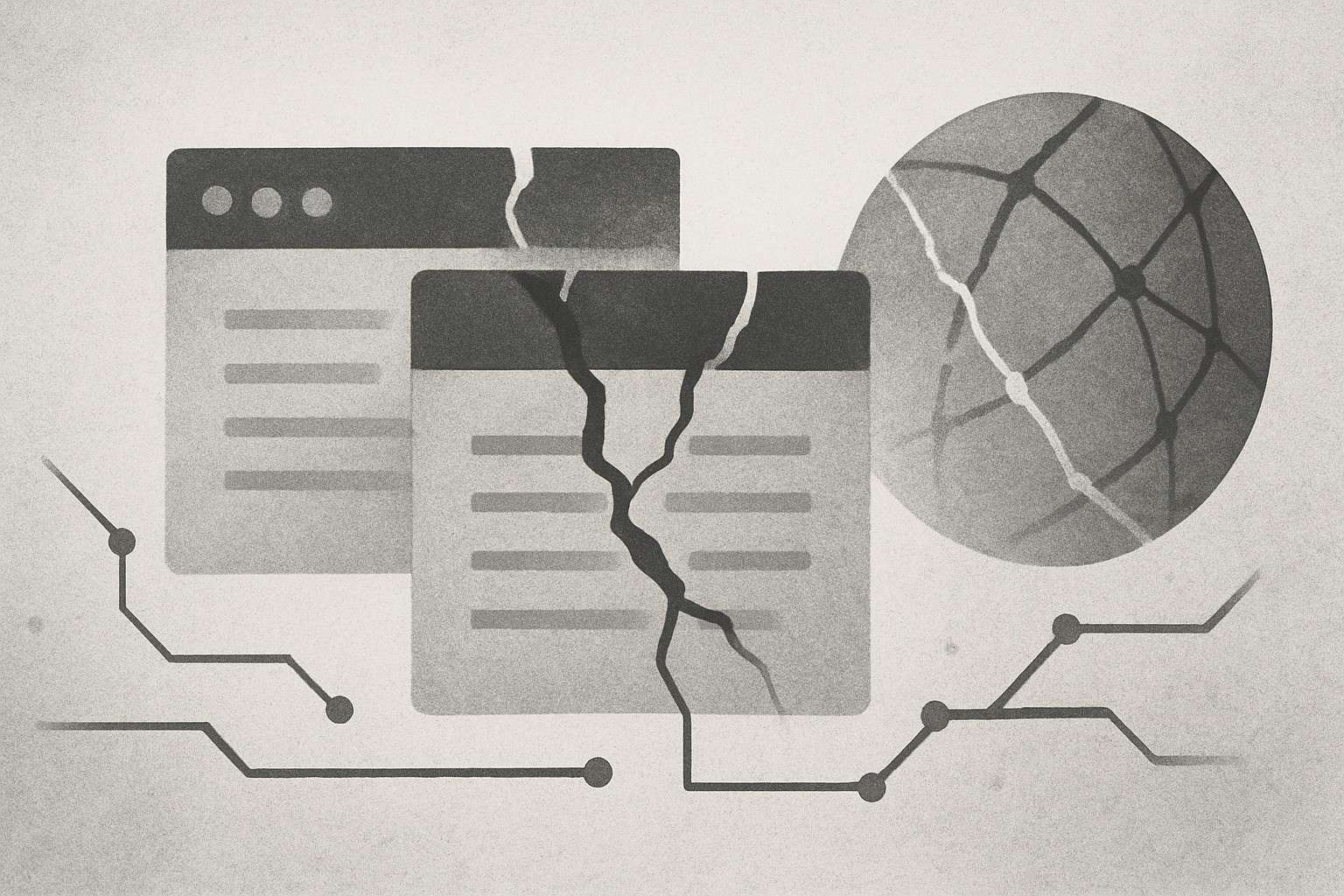
And yet, more and more, it feels like it’s coming apart at the seams.
Back in 1992, Tim Berners-Lee wrote a short note for the W3C on how to design a URI—a web address.
He argued for permanence, clarity and predictability. The web, he believed, would only work if a link still meant the same thing tomorrow as it did today.
But something changed.
Jonathan L. Zittrain warns us that the very features that made the web powerful—its openness, flexibility, decentralization—are now undermining its reliability as a record of knowledge.
The culprits are mostly link rot (URLs disappearing) and content drift (pages changing over time).
The numbers are stark:
→ Half of all links in U.S. Supreme Court opinions since 1996 no longer work.
→ Three quarters of links in the Harvard Law Review are dead.
→ In The New York Times archive (≈2 million links since 1996), a quarter of deep links have rotted.
Meanwhile, the move from print to digital has weakened traditional custodianship. Libraries now provide only temporary access to journals locked behind subscriptions. Ebooks can be silently altered or deleted—famously, Amazon once pulled 1984 from Kindles (ok, it didn’t go exactly like that, but you can read about it here).
The paradox is brutal: trivial data lingers forever (old social posts), while essential references disappear without a trace.
Some days it feels like the internet is really going to shit.
But then I think about LLMs , and I see a spark of hope.
Once a model has been trained on a piece of text, that knowledge doesn’t vanish the way a broken link does. It’s not stored like a page in a library—it’s diffused, compressed, embedded in patterns. When you ask for it back, the answer is never word-for-word identical.
It’s more like an oral tradition than a printed book: the story shifts, the phrasing changes, but the important thing is that the substance endures.
That might sound like a flaw, but it could also be a new form of preservation. Writing itself is a young technology in human history; widespread literacy is only a few centuries old. For most of our past, memory was collective, fluid, retold again and again.
LLMs echo that. They don’t “archive” the web—they metabolize it, and retell it.
So if the written web is fragmenting, maybe the next layer of memory won’t be static pages at all, but dynamic re-creations. Imperfect, yes—but perhaps more resilient than we expect.
That’s it for today, see you next week.

If someone forwarded this to you, you can subscribe.
I also publish on paolo.blog and monochrome.blog.
Leave a Reply