
TTL 53
A few days ago, I looked again at a photo I had taken.
It was vibrant, detailed, alive. The colors were doing real work—guiding the eye, creating tension, adding warmth. It was, without question, a color photograph. One of those images that feels complete exactly as it is.
I decided to share it on monochrome.photo.
There was just one problem. The site is—by my own choice—strictly black and white. To post the image, I had to strip away the color. I had to remove the very thing that made it striking.
A doubt crept in.
Why remove something that was working so beautifully? Why throw away potential? Couldn’t I just publish it as it was and let the image express its full range?
For a moment, breaking the rule felt reasonable. Even logical.
Then I stopped.
I converted the photo to black and white and posted it anyway.
I paired it with a quote by Jony Ive that had been sitting in the back of my mind the whole time:

That decision—discarding something valuable on purpose—felt uncomfortable. But it also felt right.
This principle extends far beyond photography.
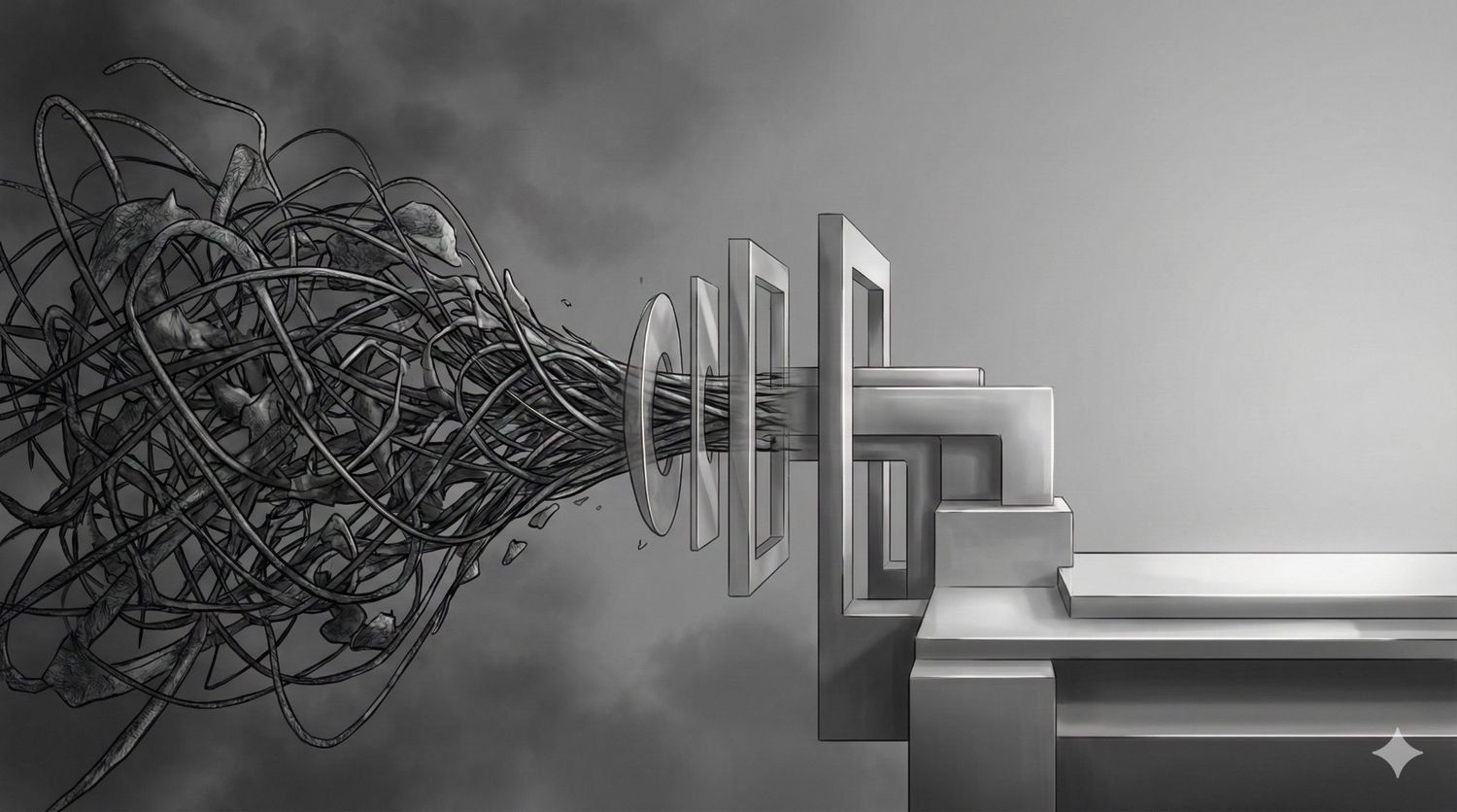
I call it intentionality through scarcity.
Basically, it’s the idea that you create better focus and better results by deliberately limiting your options, so what you choose actually matters.
Take time for example: most of us are extremely intentional with money (we budget carefully, we know how much we can spend on rent, groceries, and dinners out, we track expenses), but when it comes to time, we behave as if it were infinite.
We leave the house in the morning with no real plan for how we’ll invest the next sixteen hours. We let meetings expand, decisions linger, distractions pile up. We treat time as elastic.
The irony is obvious: money can be earned back. Time cannot.
The only way I found to be intentional with time is to make it scarce.
Time blocking works for this exact reason. By putting boundaries on your calendar, you artificially reduce supply. You are forced both to focus and to say no to irrelevant things.
And saying no is where value is created.
Shreyas Doshi proposes a simple mental model: imagine your time is worth $5,000 an hour. It’s not a literal number—it’s a lens. With that price tag attached, some behaviors immediately feel absurd. Would you spend an hour looking for a lost file on your desktop? Would you spend it endlessly debating which gym to join?
James Clear adds another layer. The value of time changes with age. At twenty, time feels abundant. At fifty-five it doesn’t. Meanwhile, your ability to produce value increases with experience. That means every hour wasted today costs far more than it did decades ago.
This logic isn’t new, nor limited to time. It’s a widely used concept in luxury business.
Enzo Ferrari famously said that his company should always produce one fewer car than the market demanded.
If everyone can have everything, value collapses.
If you can say yes to everything, your decisions carry no weight.
As Sam Altman said, you should have a really good reason to think about anything other than the most important thing you need to do.
My goal is to design systems where my energy is reserved for executing what I’ve already decided matters. Creating scarcity means discarding beautiful things — like the colors in that photograph— but it’s also a way to ensure that what remains is done with full presence, clarity, and intention.
What do you apply this concept to?
Ps, if you want to see my photo, you can find it here 😉

If someone forwarded this to you, you can subscribe.
I also publish on paolo.blog and monochrome.blog.
Leave a Reply