
TTL 41
Good Morfternight friends!
Automattic has been a distributed company since day one.
When Matt hired the very first employee, the time difference between San Francisco and Cork (Ireland) was already baked in. That made two things inevitable: communication had to be text-first (that’s why the writing culture is so important to us) and asynchronous (again, something I often and extensively write about).
Over the years, we built everything else on top of those foundations.
For me, remote working is actually a family tradition, and I’ve seen it grow and evolve. That’s why I enjoy analyzing how communication has changed and shifted over these more than 40 years. 🥴
How hard can it be?
At Automattic, more than 1,500 people in 70+ countries work together without an office. Communication runs on a mix of tools, each with a clear role.
Our backbone is P2, a network of thousands of WordPress sites where every discussion, decision, and update is written down.
Quick coordination happens on Slack, project planning on Linear, code on GitHub, and real-time sync on Zoom. For drafting together we still use Google Docs, though collaborative editing is coming natively to WordPress soon.
Since the first day, that has added up to literally millions of posts and comments— just know that I alone have published over 1.5 million words.
With that much volume, nobody can read everything anymore, so we rely on filters, notifications, and tools like Swarm, which every day highlights the 15 most active threads across projects, teams, and community spaces to keep us updated.
Does this seem overwhelming?
It is. It’s a lot of information—thousands of posts a day—but it works: it keeps every Automattician connected, informed, and part of the conversation.
The Core Principles
There are two ideas that define our communication culture:
- Radical Transparency: we default to openness, with every conversation accessible to everyone in the company.
- Asynchronous by Design: we don’t expect everyone to be “on” at the same time.
Let’s look at what those mean in practice.
1. Everything is documented
Our internal platform, P2, started life as a WordPress theme (it was called Prologue, later updated to version 2 and eventually shortened to P2) that lets people post directly on the front end of a site—fast, simple, and visible to everyone. Over time it evolved into a network of thousands of P2s for teams, projects, and watercooler chats (couch surfing, classified ads, house renovations, babies, pets, music, or games, we kind of have it all).
During the pandemic, we even made P2 public as an experiment, since many companies asked how we managed distributed communication. It was useful for a time, but eventually most organizations settled on their old tools, while P2 remained our backbone.
Every post, every comment, every decision ever made in the history of Automattic is preserved there.
When new colleagues get onboard, they aren’t given a summary of the past; they’re given access to the actual conversations as they unfolded. Want to know why a product was named the way it was, or why a design choice stuck? You can trace it back and read all the thoughts behind it.
It’s like watching the video of an event instead of hearing someone’s retelling.
2. Control belongs to the reader, not the sender
Email puts the burden on the sender: you decide who receives, who is CC’d, who is left out. That creates two problems: being overwhelmed with irrelevant messages, and being excluded from important ones without even knowing they existed.
P2 flips that. Authors only decide where to post; readers decide what to follow.
If you’re new to Jetpack, you can start with the general Jetpack P2 and discover from there. If you work on Jetpack Forms, you subscribe to the relevant P2. If you’re interested in a conversation about something you don’t work on, you can simply follow that P2 and join when you have something to add.
The responsibility shifts: you curate your own flow of information, instead of depending on other people’s mailing lists.
Other companies solve the same problem differently. For example, Stripe replicates a similar transparency culture using Google Groups. Different tool, same principle—the sender doesn’t control who gets to know, the archive does.
3. Asynchronous communication levels the field
Working in English when not everyone is a native speaker can be intimidating in real-time meetings. Asynchronous posting gives people time to think, draft, translate, and refine their responses.
It also balances out personality differences. The loudest or most confident voice doesn’t automatically dominate. Introverts, reflective thinkers, and those who need more time get the space they need.
Yes, it slows things down a bit, and sometimes decisions take a few days instead of a few hours. But more voices are heard, drafts are reread and improved, and the outcome is usually a better decision.
Within P2, the mechanics go deeper, if you’re interested 👇🏻
- Cross-posting: a post can appear on multiple P2s if relevant.
- Mentions: of course, you can tag colleagues and trigger notifications.
- Notifications: fine-grained controls let you choose instant updates, daily or weekly digests, or only replies to your own posts.
- Delivery channels: notifications can appear in your WordPress toolbar, via email, through Slack, or anywhere you can receive a Jabber feed.
- Reply by email: old habits die hard—if you receive a notification by email, you can reply directly from your inbox, and the message becomes a P2 comment.
- Swarm: as I said, Swarm surfaces every day the 15 most active threads across teams, projects, and “water-cooler” spaces. It’s our safety net to make sure we don’t miss important conversations outside our usual subscriptions.
- Mattchers: we create custom filters to track posts on very specific topics. These can leverage Regex and should get very specific: I once set up a mattcher for the word “blog” as I am in charge of .blog, and was flooded with thousands alerts. Refining it to
/\\bdotblog\\b/isolved the problem.
The Challenges We Face (and How We Use Them)
Of course, no system is perfect. Working from home is HARD. Rules & habits are completely different (that’s why I wrote this home office etiquette).
1. Too much chaos
In Automattic, “communication is like oxygen”. You need it to live, but too much will kill you.
Back in 2011, when Automattic had just 73 people, it was still possible to read every single post and comment. I know, I tried it for one week. It took me about 2–3 hours a day, but it could be done. Today, with 1,500 people, it’s absolutely impossible—multiply the 1.5 million words I wrote since joining by hundreds of colleagues and you get a sense of the scale.
No one can read everything.
That’s why onboarding is designed to help people adapt:
- Each newcomer is paired with a mentor from a different team, to give them a cross-company perspective.
- They receive a curated list of “milestone posts” that map the history of Automattic, along with role-specific threads relevant to their work.
- The Field Guide offers principles, templates, and advice about how to handle communication.
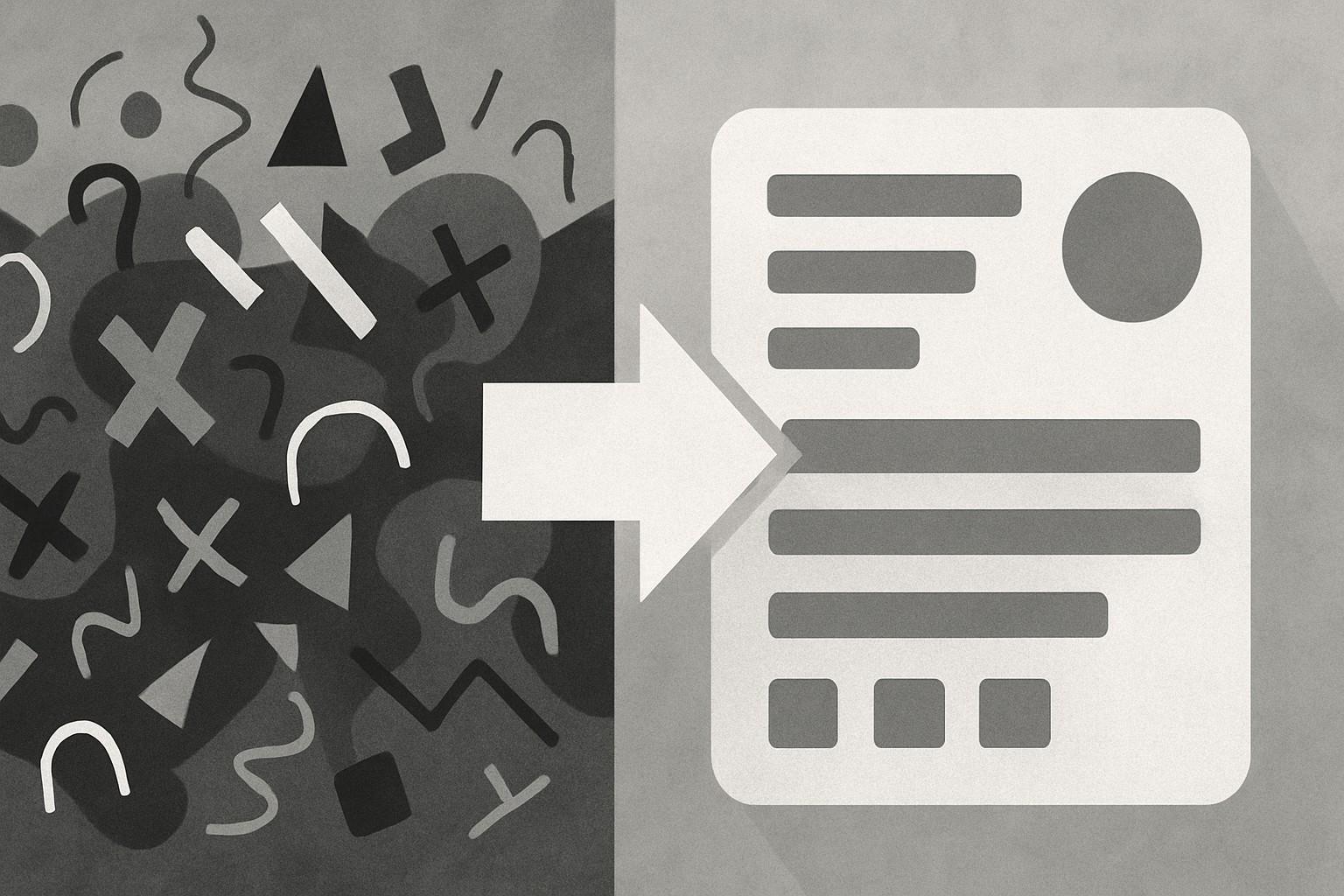
As I explained here, chaos is layered, not random. The key is not to eliminate it, but to learn to navigate it.
As Buddha said, “Chaos is inherent in all compounded things. Strive on with diligence.”
2. Not enough chaos
In a physical office, serendipity happens everywhere. You bump into someone by the coffee machine, overhear a conversation, or catch a note on a desk that sparks an idea.
In a distributed company, that doesn’t happen—at least not by accident. So we have to create our own moments of randomness.
We use Donut to pair colleagues for informal monthly chats. They’re meant to feel spontaneous, but they’re still scheduled in advance and placed on calendars; not exactly the definition of spontaneity.
Meetups and company-wide gatherings help too. But even for someone like me, who travels often, I might see colleagues a few times a year. And those encounters are generally tightly planned: fly in Tuesday night, meetings on Wednesday, fly out Thursday. If we’re lucky, we squeeze in a few unstructured hours of genuine connection.
It’s valuable—but it still doesn’t replace the true randomness that is a foundational characteristic of serendipity.
The Human Side of Chaos
The truth is: there’s a lot of information. As a newcomer, it can feel overwhelming.
At first, you can’t find anything. Then, you find too much—and drown in it. Over time, though, you start to develop your own filters, routines, and shortcuts.
Long tenured Automatticians know where to look, who to ask, and what keywords unlock the answers. New hires need time to learn that balance—but once they do, they become fluent in the system.
And the system, when used well, will give you exactly what you need, exactly when you need it.
We don’t fight chaos—we embrace it.
We document everything, give people control over their own flow of information, and slow conversations down so more voices can be heard.
It’s not always smooth, but it’s how 1,500 people spread across dozens of time zones manage to stay connected, collaborate, and make decisions together—without ever sharing the same office.
That’s it for today, see you next time.

If someone forwarded this to you, you can subscribe.
I also publish on paolo.blog and monochrome.blog.

Leave a Reply to Mariusz Szatkowski Cancel reply